

Post-Operative Care & Recovery
Your recovery is just as important as your surgery. Below are answers to common questions and guidance to help you heal safely and confidently.If something doesn’t feel right — call us. We would rather answer a simple question than miss a preventable problem.
The “Big 3” Surgical Complications to Watch For
We educate every patient on these because early action prevents serious issues.
Surgical Site Infection (SSI)
An infection can occur at the incision or deeper in the joint.
Normal findings:
Mild redness at the edges of the incision
Small amount of clear or slightly pink drainage
Mild swelling and warmth
Low-grade temperature under 100.5°F
Call us immediately if you notice:
Increasing redness spreading outward
Thick yellow/green drainage
Foul odor from incision
Fever over 101°F
Worsening pain after initially improving
Incision opening
Early treatment prevents major complications.
Pneumonia
After anesthesia and decreased activity, your lungs don’t expand as well. That can lead to pneumonia.
Prevention:
Get up and walk as instructed
Take deep breaths and cough regularly
Call us if you have:
Shortness of breath
Chest pain with breathing
Persistent cough
Fever with respiratory symptoms
Movement and deep breathing are medicine.
Deep Vein Thrombosis (DVT)
A blood clot can form in the leg after surgery due to reduced mobility.
Prevention:
Walk frequently (every 1–2 hours while awake)
Perform ankle pumps regularly
Take your prescribed blood thinner if ordered
Stay hydrated
Call us immediately or go to the ER if you have:
New calf swelling (one-sided)
Calf pain or tightness
Warmth or redness in one leg
Sudden chest pain or shortness of breath (this may indicate a pulmonary embolism — call 911)
Clots are preventable. Movement is critical.
When To Call Your Surgeon
Call your surgeon’s office if you experience:
Fever over 101°F
Uncontrolled pain
Persistent nausea or vomiting
Increasing swelling not relieved by elevation
New numbness or weakness
Drainage soaking through your dressing
Any concern that feels abnormal
We would rather you call early than wait too long.

Call 911 or go to the ER immediately if you have:
Chest pain
Sudden shortness of breath
Signs of stroke
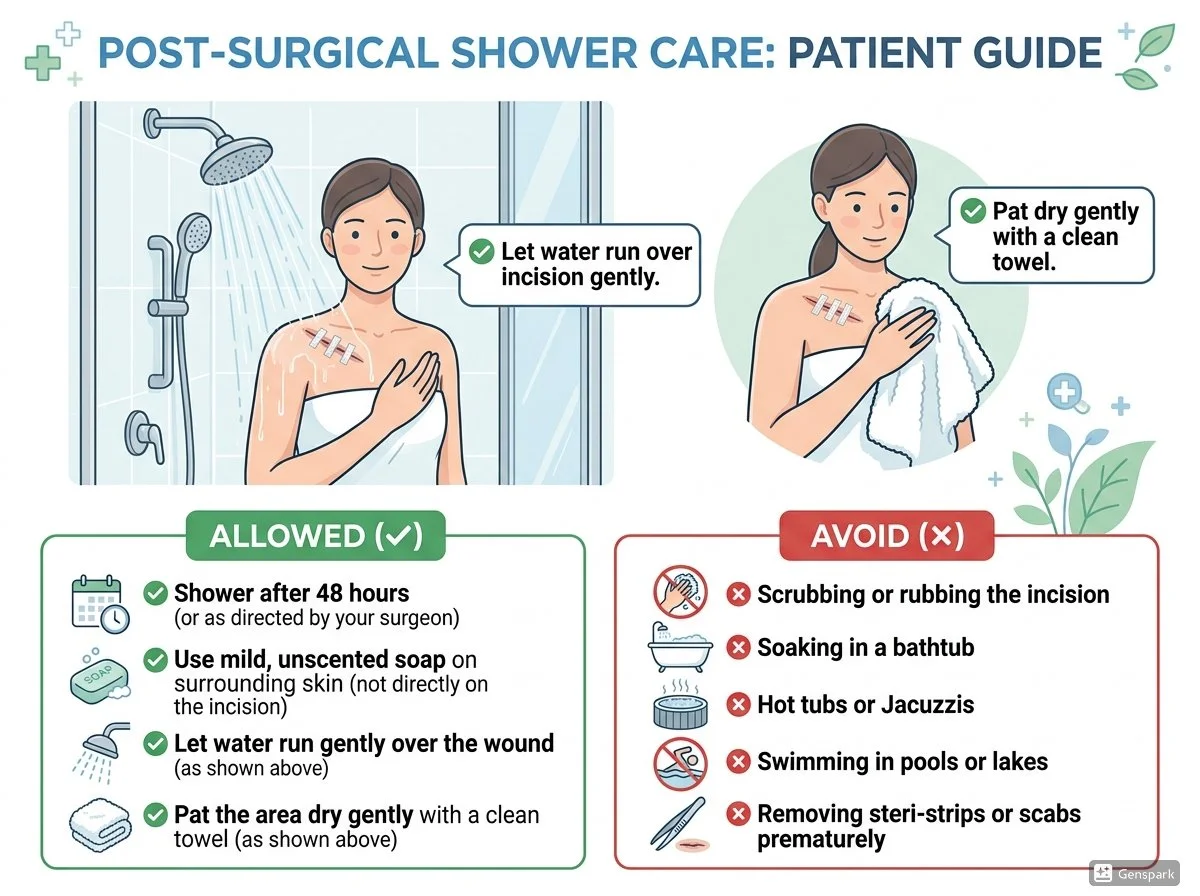
Showering & Bathing
Unless instructed otherwise:
You may shower 24-48 hours after surgery. Refer to your specific discharge instructions.
Keep your dressing clean and dry.
If you have a waterproof dressing, you may shower normally but do not scrub the incision.
Pat dry gently — do not rub.
Do NOT soak in a tub, hot tub, or pool until cleared (usually 4–6 weeks).
Submerging the incision too early increases infection risk.
Pain Control— What To Expect
Pain after surgery is normal. Our goal is manageable pain that allows you to move and recover, not zero pain.
What Is Multimodal Pain Control?
Your surgeon may use multiple medications that work in different ways to control pain. This allows lower doses of narcotics and better overall relief.
Your plan may include:
Acetaminophen (Tylenol)
An anti-inflammatory (ibuprofen, meloxicam, celecoxib)
A nerve medication (gabapentin or similar)
A muscle relaxer
A limited narcotic prescription for breakthrough pain
Each medication targets a different pain pathway
Why You Should Take Most Medications on a Schedule
Medications like acetaminophen, anti-inflammatories, and nerve medications work best when taken routinely for the first several days.
They reduce inflammation and nerve sensitivity before pain spikes.
Narcotics should be used:
Only as needed
For breakthrough pain
For the shortest time possible
Staying ahead of pain is easier than chasing it.
Suporting Your Recovery
Your recovery doesn’t stop when you leave the surgery center. These simple habits help reduce complications, control pain, and speed healing.
Swelling is normal after surgery and may increase during the first few days.
To reduce swelling:
Elevate the surgical limb above heart level when resting
Use ice packs for 20 minutes on / 20 minutes off
Perform ankle pumps or gentle movement as instructed
Wear compression devices if recommended by your provider
Controlling swelling helps reduce pain and stiffness.
Swelling Control & Elevation
Pain medication and reduced activity can slow digestion.
To prevent constipation:
Drink plenty of water
Take stool softeners if prescribed
Eat fiber-rich foods
Walk regularly
Addressing constipation early makes recovery much more comfortable.
Constipation Prevention
Movement is one of the most important parts of recovery.
Unless your surgeon instructs otherwise:
Walk several times throughout the day
Avoid sitting or lying down for long periods
Perform your prescribed exercises
Follow any weight-bearing restrictions carefully
Regular movement improves circulation and helps prevent blood clots.
Activity & Movement
Your body needs proper nutrition to repair tissue and regain strength.
Focus on:
Protein with every meal
Fruits and vegetables
Adequate hydration
Limiting alcohol and excessive sugar
Protein plays a key role in wound healing and muscle recovery.
Nutrition For Healing